This morning marked the first frost of the season for many of us! Frost is a little nuanced as there’s not an exact temperature at which frost occurs and here’s why.
Air temperatures at our airport reporting stations (and even many backyard thermometers) are generally eye level. Officially at the airport the thermometers are 6 feet off the ground. So while the temperature on the thermometer may say one thing, the air temperature at the ground could be another. See, colder air sinks. So it’s possible (and even likely) that the temperature at the ground is colder than what the thermometer says.
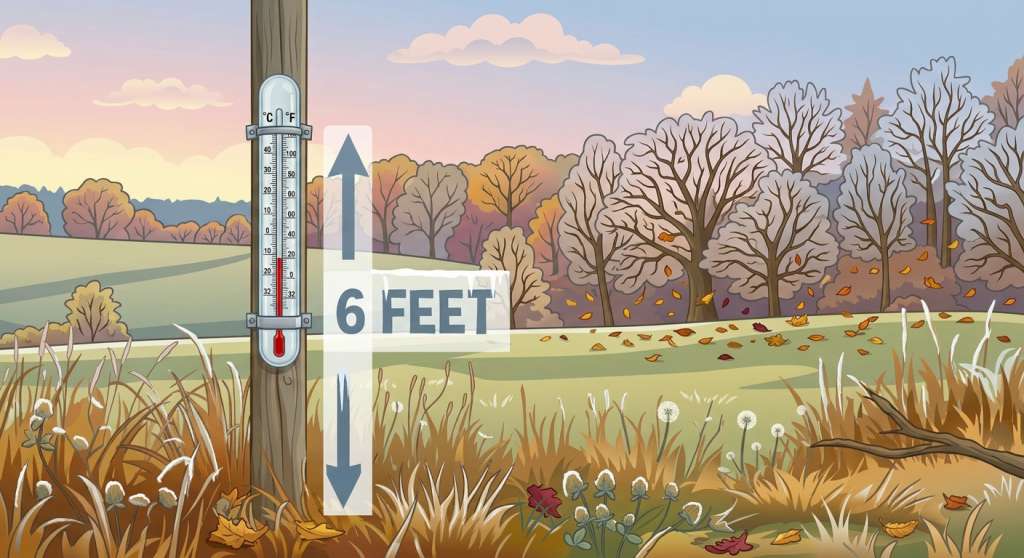
With colder air sinking toward the ground, the thermometer may say 33° to as much as 36° but the actual temperature at the ground is 32°. For frost to occur, we do know that the temperature at the surface MUST be at least 32° or colder or we wouldn’t be dealing with frost (frozen ice), we’d instead be dealing with dew (liquid water).
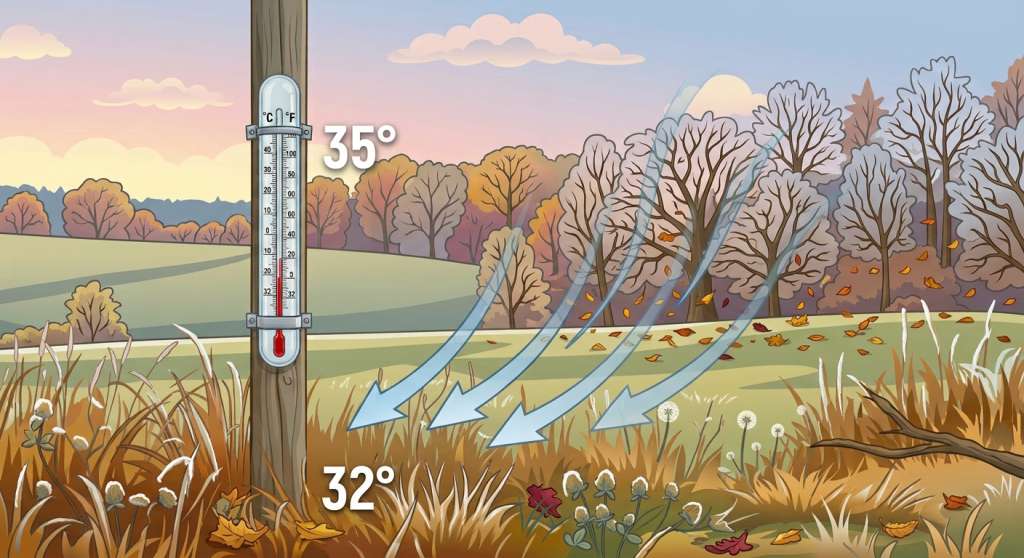
The reason, while visual evidence would say we hit freezing, we still say frost is because:
1) For record keeping purposes, our first freeze is made official by the thermometer, not what may or not be the temperature at the ground level.
2) While a brief dip to 32° may be enough to freeze the miniscule droplets on the grass or your windshield, that brief and shallow layer of cold air still isn’t enough to freeze and kill things like standing water or mosquitos, even though the temperature hit the freezing mark for a brief second.
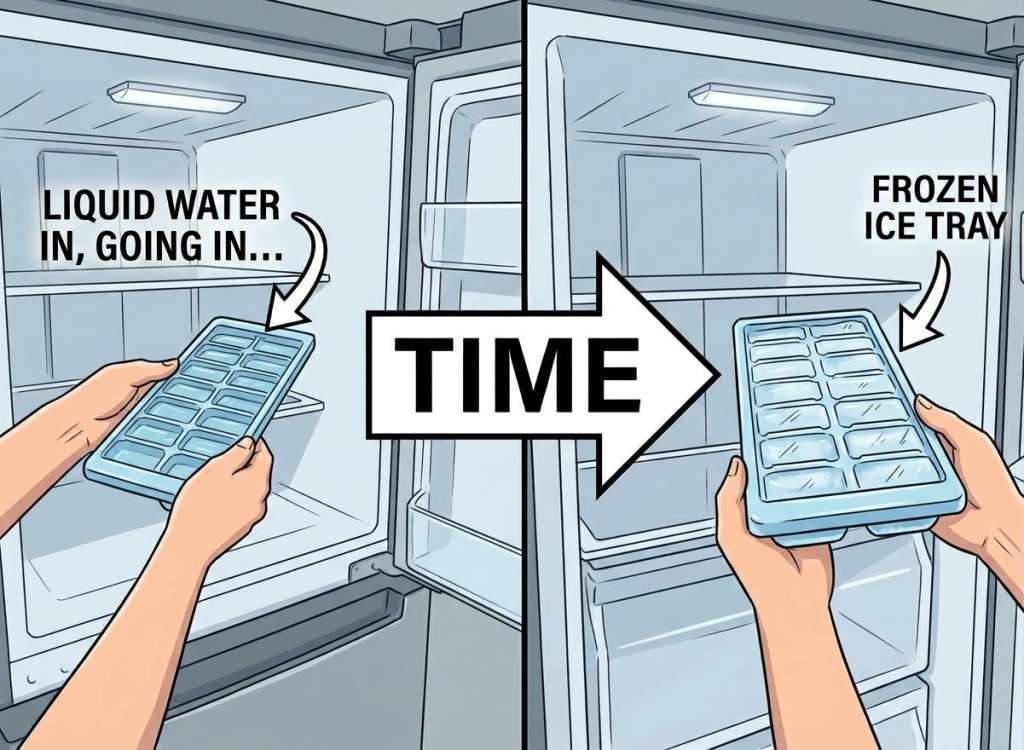
Think of it this way. If you were to make a tray of ice, you add liquid to the tray and place it in the freezer, that ice doesn’t form immediately, it takes time. It’s the same concept here.
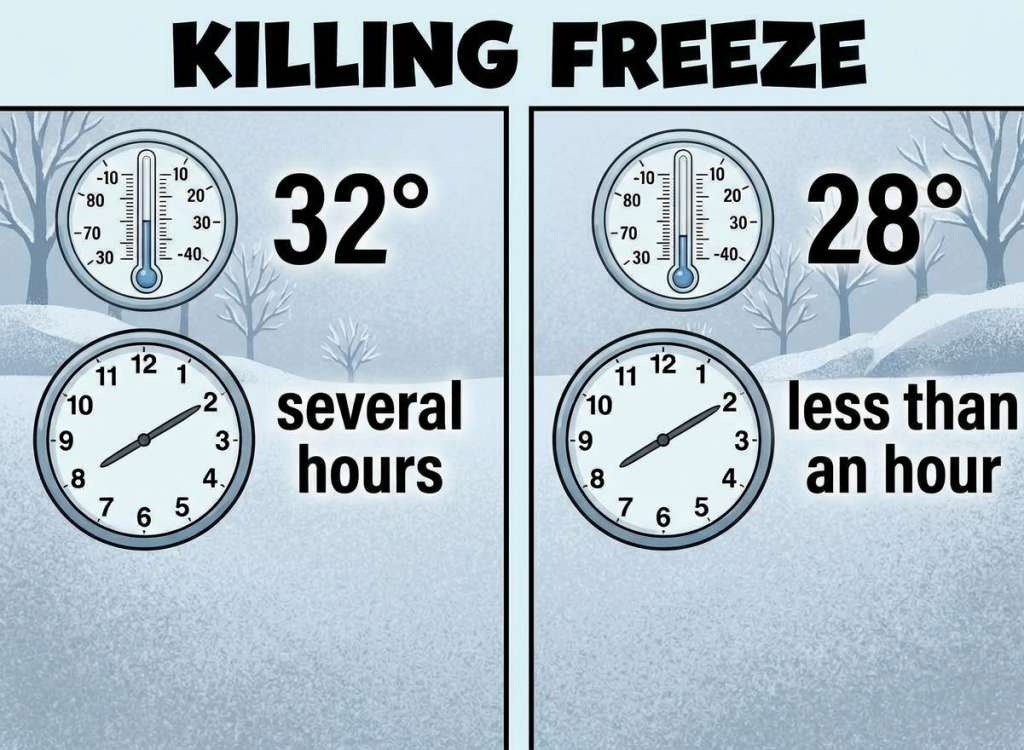
There’s two things we designate as a “killing freeze” where it’s cold enough to kill/damage plants and take care of those pesky mosquitos. It’s the “true” freeze that many of us have in our mind.
A killing freeze is either hitting or falling below 32° and sitting there for several hours, or hitting 28° at all. Either of these readings would imply even colder temperatures at the surface which would damage plants and bugs. If the thermometer hits 32° then it must be even colder at the ground. Several hours below freezing would kill those tiny, pesky bugs (and sadly the plant leaves). Dropping to 28° on the thermometer would mean it’s even colder at the ground, and those temperatures, even briefly would also cause harm to those things.
So all of this to say that, while many of us were quite cold this morning and many of us woke up to frost on the grass and windshield, it wasn’t enough to take care of the the bugs and mosquitos for the season, except in Nashua! Problem is, Nashua, you aren’t in a bubble, so all of your neighboring mosquitos may be paying you a visit. It also means that this wasn’t cold enough to cause any significant damage to outdoor plants.
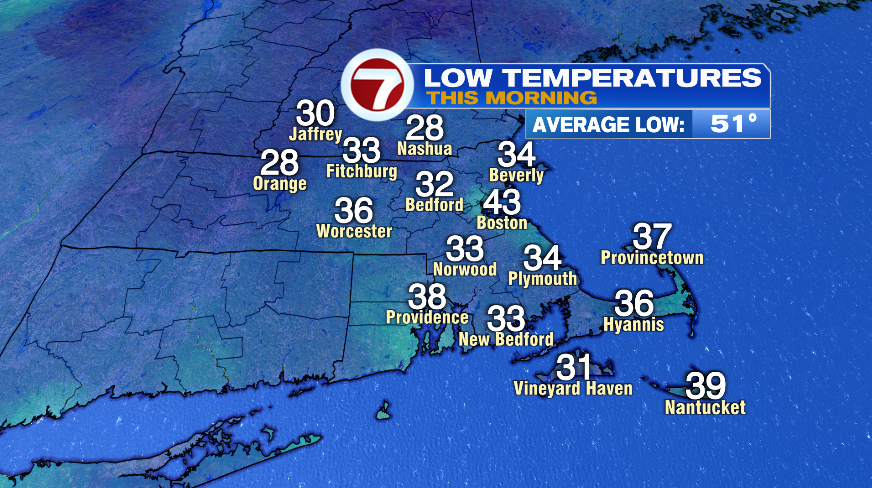
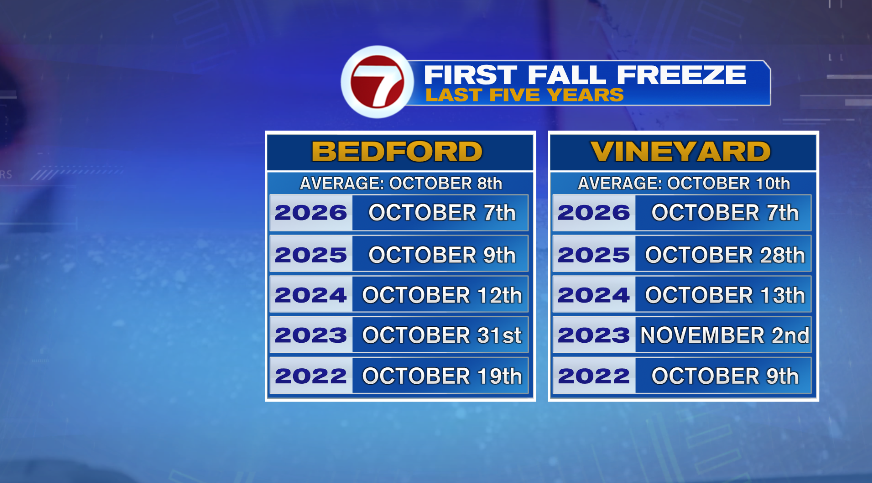
For those that did hit freezing (Bedford, Martha’s Vineyard, and Nashua) it’s not unusual. I didn’t have data for Nashua, but for Bedford and the Vineyard, the first freeze in early October is right on par with the average first freeze date. It may be shocking to see the Vineyard on the list, but remember that’s smack in the middle of the island at the airport. Towns closer to the water likely managed to stay above freezing overnight.
If you’re curious for Boston and Worcester, the average first freeze date for Boston is November 9th and October 19th for Worcester.
Bangla Zoom is most popular bangladeshi website. We are working with bengali news, english news headlines, bangla blog tips, bangla health tips, entertainmnet and more bangla helpful tips.
from Boston News, Weather, Sports | WHDH 7News
Source: https://whdh.com/weather-blog/frost-or-freeze-the-frigid-facts/
Comments
Post a Comment